

Teach Real Ballet while Keeping the Wonder Alive
If you teach children’s ballet, you probably know this path pretty well. (I know I do!)
At Three & Four Years Old:
They come in with skirts and tutus over their leotards, excited and completely unable to be still. You want to give them real foundations (not just running around in circles), but it’s a constant balancing act. Too much focus on skills and you lose them. Too much pretend play and it stops being a dance class.
At Five & Six Years Old:
They’re ready for more technique but they still live in a world of make-believe. Your students are no longer preschoolers, but they’re not ready for a true Ballet 1 class with your typical barre and centre work sequence. Pushing them to be too technical too fast will take the fun out of it for many of them.
At Seven, Eight & Nine:
Ballet class slows down and becomes more repetitive, which is exactly what good training needs. But this is also when so many children decide ballet is “the boring class” and many ask to drop it for jazz, acro, hip hop, or an entirely different extracurricular.
all along the way, you’re planning everything on your own time
Planning happens Sunday nights, in the car before class, or on your break between classes, if it even happens at all. If you teach several classes a week, planning time can add up quickly, and yet it’s usually the first thing to go when life gets full.
But what if the story did some of the work?
Here’s the idea behind everything I make in Once Upon a Ballet. Ballet was built on stories, and children learn through stories and imagination. When a class has a story running through it, the steps stop feeling like a list to get through and start feeling like something students can be a part of.
I’ve also found that my students will work harder at a tendu when they know why they have an image or idea behind it. Maybe they’re pointing their feet beautifully to show off an imaginary glass slipper. Maybe they’re learning the gesture a real ballerina uses to say “I love you” without words. Either way, stories are central to bringing ballet to life, regardless of what age group you teach.

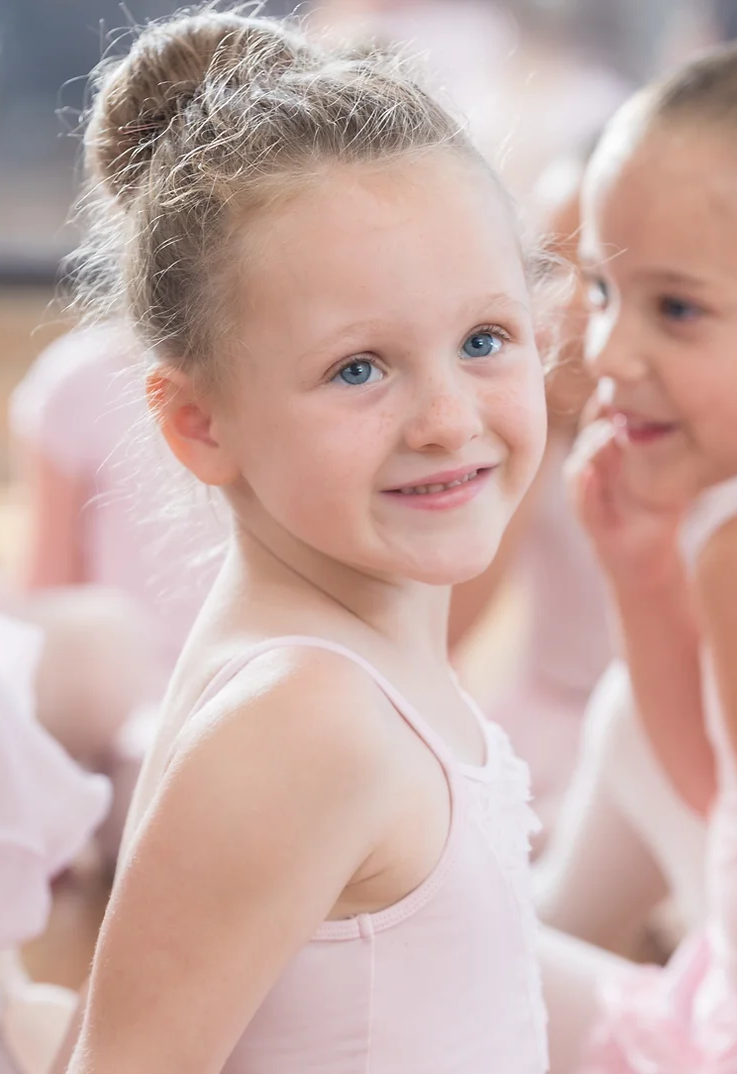
A Peek Inside a Preschool Dance Class
Here’s what a Sleeping Beauty lesson from A Year of Fairy Tales might look like with a class of four-year-olds.
Arriving at the castle. We sit in a circle and I tell a little piece of the story. Everyone has been invited to meet the baby Princess Aurora.
Circle barre. Pliés become curtsies to the king and queen. Pointed feet and bourrée turns become the fairies waking up their magic.
Across the floor. The good fairies walk, run, gallop, twirl, and leap to bring their gifts to the baby princess.
Free Movement. We “fall asleep” for a hundred years (a lovely way to practice stillness) and wake up with a beautiful port de bras.
Obstacle Course. We explore the castle in our obstacle course, reinforcing previous movements we worked on in class.
Révérence. We end the way ballerinas do, with a curtsy and a thank you.
Every exercise has a purpose on the technique side and a place in the story. So students are able to experience a pretend world during their entire dance class, while unsuspectingly also working on foundational skills and steps for ballet.
Imagination, Not Fluff
I know what some of you are thinking, because I used to think it too. Fairy tales and princess themes can sound a little lightweight for a school that takes ballet or any form of dance seriously.
I’m a classically trained teacher first. Correct placement, turnout and other skills that are appropriate for a child’s age, musicality and clean, simple technique all matter to me as much as they matter to you. The story, however, is how I get children to care about those things. It’s not a replacement for them.
Once Upon a Ballet provides a complete curriculum and lesson plans for the preschool and primary levels (ages 2 to 7).
For ages 8+, Once Upon a Ballet is no longer meant to replace your ballet curriculum or syllabus. If your school uses RAD, ABT, Cecchetti, Vaganova, or its own curriculum, please keep using it!
For your youngest students, OUB gives you ready-made classes that build the foundations your syllabus depends on. For older students, it exposes your students to the beauty of ballet alongside their technique classes. It brings them into the art form itself: the classical ballets, their music, mime and history.
From First Plié to Lifelong Love of Ballet
Our teaching materials are getting a refresh! Here’s what’s coming in 2027:
A Year of Fairy Tales: Enchanted Movement
Preschool, ages 2 to 5
A full year of fairy-tale ballet classes for your youngest dancers, with stories like The Sleeping Beauty, Cinderella, The Little Mermaid and The Nutcracker. Each lesson builds real pre-ballet foundations (posture, pliés, pointed feet, gallops, moving with the music) inside a story they can step into.
Once Upon a Ballet: Primary Ballet
Ages 5 to 7
For the in-between years. Your students keep the fairy tales they love while the ballet grows into recognizable classical technique, so moving from imaginative class to “real” ballet feels like a next step instead of a letdown.
Classical Ballet Packs
Ages 8+
For the age when ballet can start to feel boring. Each pack takes your class inside one of the great ballets (The Nutcracker, Coppélia, The Sleeping Beauty, Swan Lake) with its story, characters, music, mime and history, plus ideas for weaving it into the technique class you already teach.
Fairy Tale Summer Camps
Ages 2 to 7
Ready-to-run themed ballet camps, so you can fill your summer schedule without writing a week of plans from scratch.

What’s Inside
I write these for real classes, so they’re meant to be picked up and taught this week, without a giant manual to wade through first. Depending on the collection, you’ll get:
Ready-to-teach lesson plans with a clear class structure and short teaching notes.
Curated music playlists so you’re not hunting for the right track five minutes before class.
Demonstration videos for the times when you need to see an exercise and not just read about it.
Printables and activities that add to the ballet experience.
Teacher guidance on teaching young dancers, musicality and artistry, and moving children from imaginative movement into real classical ballet training.
Who it’s for
Once Upon a Ballet is for you if:
You teach ballet at a recreational studio and want your students to stay in and look forward to ballet beyond the age of seven.
You teach at a more serious ballet school and want your youngest classes to build strong foundations without losing the joy of ballet.
You’re newer to teaching children and would love a clear, proven class to follow while you find your teacher footing.
You’re an experienced teacher who’s tired of writing every lesson from scratch (or tired of teaching the same one you wrote back in 2015).
You direct a studio and want your ballet teachers working from something consistent and beautiful across classes and levels.
If you teach tap, jazz or a mix of styles to preschoolers rather than ballet, this probably isn’t the right fit. Once Upon a Ballet is ballet, start to finish.


Hi, I’m Ashley! I danced professionally, owned my own studio, have spent years teaching ballet to children and educating dance teachers. I’m an ABT® National Training Curriculum Certified Teacher in Pre-Primary through Level 7 (across all levels), and I’ve completed additional teacher training with Central Pennsylvania Youth Ballet.
Once Upon a Ballet grew out of a question I kept asking in my own classes. How do we give children excellent ballet training without losing the joy, the music and the imagination that made them want to dance in the first place? I really don’t think we have to choose between the two.
When I first started teaching, over 20 years ago, I had students who talked during what seemed like ALL of class. I had students who wandered around the room instead of participating. There were students who decided to do their own dance instead of waiting their turn in line.
And the worst part was, my students who did actually pay attention and were naturally eager to learn were getting frustrated because I had no idea what a truly developmentally and age-appropriate class was. I was making them to too much technique and technique that was way too advanced.
I was tired. I was frustrated too. Dance had been my life. I loved dancing and I couldn’t figure out how to transfer that over to a toddler and preschool dance class.
Why was this so hard?
I desperately wanted my students to be happy. To enjoy to coming to my class.
I wanted to be the preschool dance teacher at my studio that all of the parents requested. I wanted my students to want to pay attention and to want to learn. I wanted them to be so excited to come to class that they couldn’t wait from one week to the next.
One day, I realized something. There was one type of activity that always kept my students’ attention.
What was it? Anything we did related to fairy tales. As time went on, I realized something else. It wasn’t that it was fairy tales, per say, but that I always had my students role playing when we did anything with fairy tales.
I started doing more and more story-based dance classes. At first, my classes were a mix of different themes and stories. They were still engaging, but where the real magic happened was when I began teaching so that each class was a single theme or story. We’d explore oceans in one class and blast off into outer space in the next. We’d swim with mermaids or fly with Peter Pan. We’d get ready and go with Cinderella to the ball.
Then I became a mama and I began to understand that dance can do so much more for children than teach them movement and creativity. It should be fun and magical. It should prepare them for a structured ballet or dance class later on. BUT it should also foster their development.
Movement is so important for young children. It helps their bodies AND their brains to grow and develop. It helps them to learn about themselves and the world surrounding them. Children are meant to move. They’re meant to climb and jump and balance.
Movement directly relates to brain development. When a child jumps, for example, she is doing more than just building strength in her feet and legs. More blood flows to her brain from the physical activity, and she is using the same part of her brain that controls focus, attention and concentration. She is improving her attention span too!
And all of this is why I’ve crafted each story-based activity and lesson plan in Once Upon A Ballet to teach dance to toddlers and preschoolers with fun, imagination, AND age-appropriate child development in mind. Dance activities and lesson plans are story-based and set to the most beloved stories, themes, and fairy tales.
Commonly Asked Questions
Will this replace my syllabus? It can for preschool and primary levels (ages 2-7). For ages 8+, I’d rather it didn’t! Keep RAD, ABT, Cecchetti, Vaganova, or whatever your school trusts. OUB is built to b used alongside your studio’s syllabus of choice.
What other differences are there between the younger levels and the older ones? The younger levels (preschool and primary) follow fairy tale stories in their classes. Older levels follow classical ballets.
My students don’t really know the fairy tales. Will that be a problem? Not at all. A lot of little ones today have never heard the original stories, so each class lesson tells the story as you go. They don’t need to know any of the fairy tales walking into class.
Is it all princesses? There are princesses, of course. But there are also kings and fairies, pirates and mermaids, wolves, and toy soldiers. I write every lesson so any child in the room can find a place in the story.
I don’t own the studio. Can I still use it? Yes. These resources are written for the teacher in the room, whether or not your name is on the sign out front.